

Most advice about protecting a personal injury claim focuses on what to say to an adjuster. That matters, and it is well covered. What gets far less attention are the paperwork and timing decisions people make in the first weeks, usually alone, usually while trying to get their car fixed and get back to work.
The five below share a trait. None of them feels like a legal decision at the time. All of them are.
Which Mistakes Quietly Cost People the Most in an Injury Claim?
The expensive mistakes in an Oklahoma City personal injury claim are rarely the ones people worry about. They are administrative: signing a property damage form that releases everything, missing a deadline shorter than two years, waiting on an insurer to pay medical bills as you go, leaving your own coverage unused, and deciding you have no case because you were partly at fault.
1. Settling the Property Damage Claim on a Form That Releases Everything
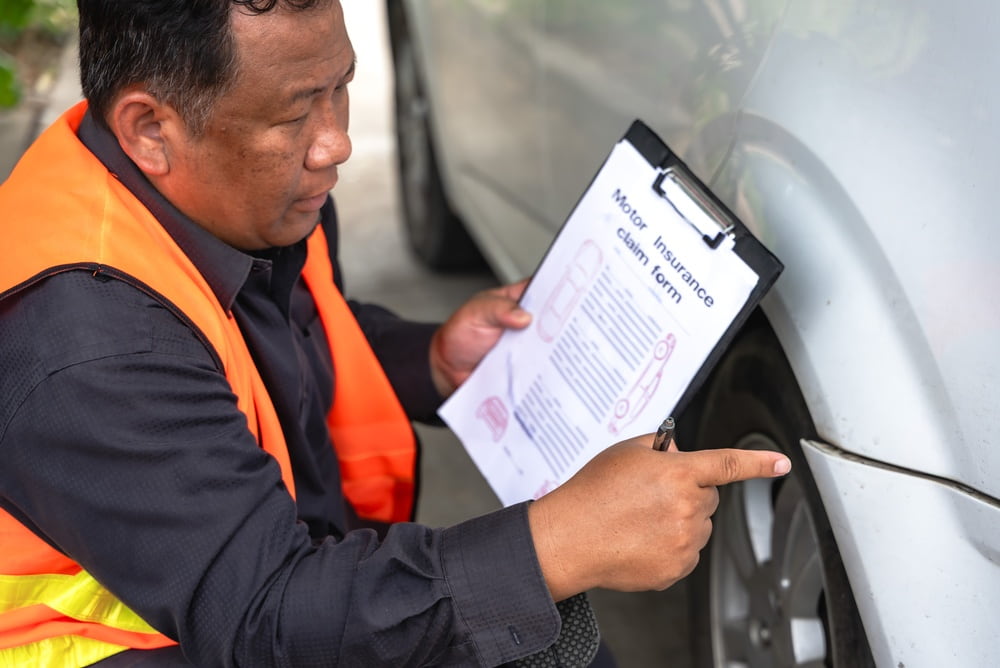
Your car and your body are two separate claims, and insurers handle them with two separate adjusters who often never speak to each other. The property damage adjuster calls first, because the car is easy to value and the insurer wants that file closed.
The risk is in the form. Some releases are written narrowly and cover only the vehicle. Others use broad language releasing all claims arising from the incident, which would include the injury claim you have not begun to evaluate yet.
How do you settle the car without touching the injury claim?
Read what you are signing, and confirm in writing that the release applies to property damage only. If the document does not say so, ask for one that does, and keep the email in which you asked.
Nothing requires you to accept the injury side on the insurer’s schedule. The property damage claim can generally be resolved while the injury claim stays open, but only if the paperwork says that.
2. Assuming the Two-Year Deadline Is the Only Deadline
Oklahoma generally gives two years to file a personal injury lawsuit. Several other deadlines run much shorter, and missing one of them can end a claim while the two-year clock still shows plenty of time.
Which deadlines are shorter than two years?
Three come up constantly in the Oklahoma City metro.
A claim involving a city, a county, a public school, a transit agency, or any other government entity requires written notice within one year of the loss under the Governmental Tort Claims Act. The entity then has ninety days to respond, and suit must be filed within 180 days after a denial.
A crash with a city vehicle, a fall at a public facility, or an injury caused by a road defect all land in this category, and people rarely recognize it at the time.
A workers’ compensation claim must be filed with the Commission within one year from the date of injury, or within six months from the last payment of benefits. The Oklahoma Workers’ Compensation Commission publishes the process and forms.
Your own insurance policy contains notice provisions, particularly for uninsured motorist claims and hit-and-run claims, that require prompt reporting. Those are contract terms rather than statutes, and they are often far shorter than two years.
A single crash can involve all three at once. A delivery driver struck by a city vehicle has a work claim, a government claim, and possibly an uninsured motorist claim, each on its own clock.
3. Waiting for the At-Fault Insurer to Pay Medical Bills as You Go
They generally will not, and this misunderstanding causes more financial damage than any other item on this list.
A liability insurer pays once, at the end, in a single settlement covering everything. It does not pay bills as treatment happens. People who believe otherwise stop treating when the bills arrive, which produces gaps in the record and, more importantly, means they stop getting care they need.
So how do people pay for treatment in the meantime?
Usually through some combination of health insurance, medical payments coverage on an auto policy, and providers willing to treat on a lien basis pending resolution.
Health insurance is the most common and the most underused, because people assume it should not apply when someone else caused the crash. It applies. The insurer may assert a right to be repaid out of any eventual settlement, and that reimbursement claim is frequently negotiable at the end.
The alternative, going without treatment, costs more than the reimbursement ever will, both medically and in the value of the claim.
4. Leaving Your Own Coverage Unused
Many Oklahoma drivers carry coverage that would help them and never open a claim on it, usually because they assume using it will raise their rates or that it only applies if they caused the crash.
What coverage might already be sitting on your policy?
Medical payments coverage, often called med pay, pays medical expenses regardless of fault, usually in amounts from $1,000 to $10,000. It is a small number that arrives early, which is exactly when people need it.
Uninsured and underinsured motorist coverage matters even more. Oklahoma requires insurers to offer it under 36 O.S. § 3636, and it can only be rejected in writing. A rejection signed once remains valid for the life of the policy, so plenty of drivers who think they declined it did not, and plenty who think they have it signed it away years ago.
That coverage is what responds when the at-fault driver has Oklahoma’s minimum limits of $25,000 per person, which a serious injury exhausts almost immediately. The Oklahoma Insurance Department explains how it works.
Pull your declarations page and look. It takes five minutes and it regularly changes what a claim is worth.
5. Writing Yourself Off Because You Were Partly at Fault
This one costs people entire claims, and it happens quietly. Someone concludes they were speeding a little, or crossed outside a crosswalk, or should have seen the other car, and never calls anyone.
How much fault actually ends a claim in Oklahoma?
More than half. Under 23 O.S. § 13, contributory negligence does not bar recovery unless the injured person’s negligence is of greater degree than the negligence of the person who caused the damage, or greater than the combined negligence of everyone who did.
So a person 30% at fault recovers 70% of their damages. A person exactly 50% at fault still recovers. The claim ends only when their share is greater than everyone else’s combined.
The other half of this is that the fault percentage is not fixed by the police report, by the other driver’s version, or by your own impression at the scene. It is determined by evidence, and initial assumptions get revised in both directions once someone actually investigates.

A Sixth Worth Naming: Handling All of It Alone
None of the five above requires legal training to avoid. They require knowing that the question exists.
That is the real gap. A person handling a claim alone does not know that the property damage form has two versions, that a city vehicle triggers a different calendar, that their own policy might carry med pay, or that being partly at fault is a percentage rather than a verdict. The adjuster on the other end knows all four, and has no obligation to raise them.
AP Injury Lawyers takes these calls daily, and a large share of them are people who have already done three of the five things on this list. Most of those claims are still workable. The ones that are not usually involve a signature or a missed notice deadline, which is why the call is worth making early rather than after the paperwork.
What These Five Have in Common
Every one of them happens in the first few weeks, before most people have spoken to a lawyer, and every one is close to impossible to fix afterward.
A signed release is a contract. A missed notice deadline is gone. Unused coverage can sometimes be claimed late, though policy notice provisions complicate it. A treatment gap is a permanent feature of the medical record.
The consultation that prevents all five is free and takes less time than the property damage call you already took.
Questions People Ask After Making One of These
I already signed something for the car. Is my injury claim over?
Not necessarily. What matters is what the document actually says, and broad language is not always enforceable as written against a claim that was never discussed. Get a copy of exactly what you signed and have it reviewed before assuming the worst.
I did not go to the doctor for two weeks. How bad is that?
It is an argument the other side will make rather than a bar to the claim. Delayed onset is medically ordinary, and a treating physician can address the connection. The more useful response is to start treating now and stay consistent.
The crash was over a year ago and a city truck was involved. Is it too late?
Possibly, and the answer depends on the exact date of the loss and whether any notice was given. This is worth asking about immediately rather than assuming, because the answer sometimes turns on facts a person does not realize are relevant.
I told the adjuster it was probably my fault. Can I take that back?
Statements at a scene are evidence, not verdicts, and people routinely misjudge fault in the moments after a crash. What you said is one piece of information among many, and physical evidence often contradicts it.
Does hiring a lawyer late hurt my case?
Later is harder than earlier because some evidence expires, but it is generally better than not at all. Bring every document you have, including anything you signed, so the first conversation deals with where the claim actually stands.
Call For A Free Consultation.
Available 24 Hours A Day, 7 Days A Week.
The Ten Minutes That Change the Arithmetic
None of these five mistakes involves saying the wrong thing to an adjuster. They involve a form, a calendar, an assumption about who pays, an unread declarations page, and a conclusion reached too early. Each one is fixable before it happens and mostly not after.
If you were hurt in the Oklahoma City metro and any of this sounds familiar, AP Injury Lawyers will tell you where you stand without charging you for the conversation. Call or text +1 (405) 336-3000, or reach us through our contact page.
