
Determining fault in a multi-vehicle car accident is a different exercise from sorting out a two-car collision, and the difference is not just arithmetic. In a rear-end crash between two vehicles, the story is usually obvious within minutes.
In a four-car chain reaction on I-40 during morning traffic, four drivers give four accounts, four insurers open four files, and each has a financial reason to point somewhere else. What settles it is rarely testimony. It is metal, glass, and data.
Who Is Actually at Fault When Three or More Cars Collide?
Fault in a multi-vehicle car accident is settled by physical evidence rather than by testimony, because in a pileup almost every driver believes they were struck first. Investigators work backward from damage patterns, rest positions, and data recorded inside the cars to establish the order of impacts, and that order usually decides who pays. Much of that evidence stops existing once the vehicles are repaired.
The Short Version, Before the Details
- A pileup is often treated in law as several separate collisions rather than one event, and each impact can have its own at-fault driver.
- Damage location on each vehicle, front versus rear, is usually the single most reliable indicator of impact sequence.
- Most vehicles built in the last decade record speed, braking, and steering in the seconds before a crash, and that data is overwritten or lost when the car is repaired or salvaged.
- Oklahoma juries may assign fault to people who are not defendants in the lawsuit.
- Having three or more at-fault drivers can work in an injured person’s favor under Oklahoma’s shared fault rule, for a reason most people never hear.
Why a Pileup Is Not One Crash but Several
A chain reaction is legally several collisions, and separating them is the first thing an investigator does. If Car A stops short, Car B strikes A, and Car C then strikes B, there are two distinct impacts with potentially two different at-fault drivers.
The reason this matters is practical. Your injuries might have come from the first impact, the second, or both, and the insurance policies available to you depend on which drivers are responsible for which impact. A passenger in Car B may have a claim against both the driver of Car C and the driver of Car A, depending on what the evidence shows.
The opposite scenario also happens. Sometimes a single driver causes everything that follows, and the middle vehicles are pushed into the cars ahead of them with no opportunity to avoid it. Sorting one situation from the other is the whole ballgame.
What Physical Evidence Decides Fault in a Chain Reaction?
Physical evidence decides it because physical evidence does not have an insurance policy. When AP Injury Lawyers takes on a pileup, these are the categories that carry the weight.
What does damage location tell an investigator?
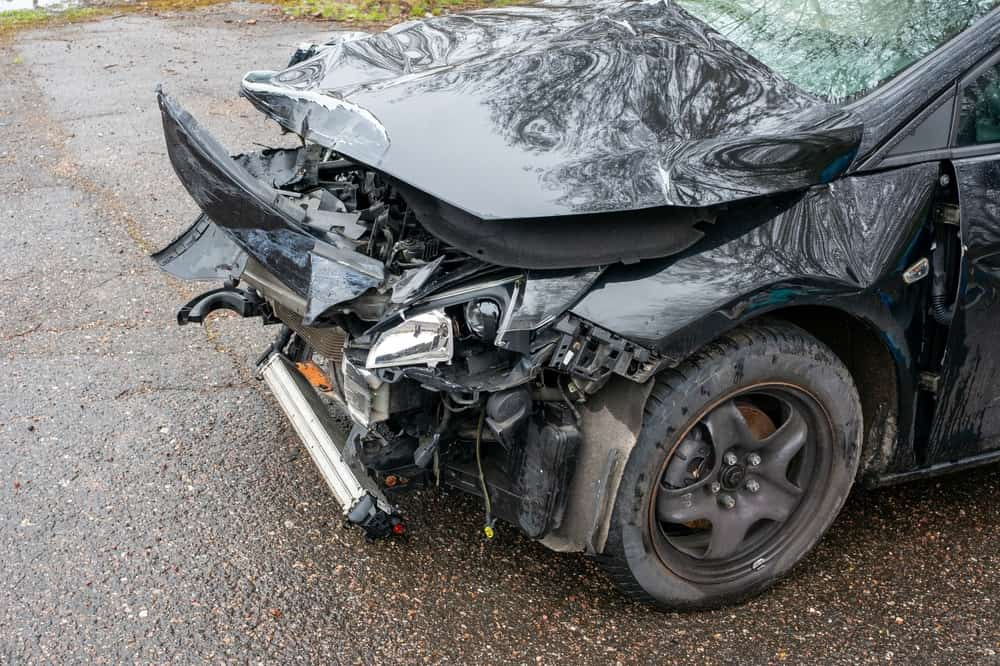
It tells them the order. A vehicle struck in the rear and then pushed into the car ahead shows damage at both ends, and the severity relationship between the two ends often reveals which came first. A vehicle with heavy front damage and light rear damage tells a different story than the reverse.
Crush depth matters too, because it correlates with impact force, which correlates with speed. Photographs of every side of every vehicle, taken before anything is repaired, are worth more later than most people realize at the time.
What is an event data recorder, and what does it capture?
An event data recorder, sometimes called a black box, is a module in most modern vehicles that continuously records a few seconds of operating data and preserves it when a crash triggers the airbag system. Depending on the vehicle, it captures pre-impact speed, throttle position, brake application, steering input, seat belt status, and the change in velocity during the collision.
In a multi-vehicle crash this data can answer the question no witness can: did the driver behind you brake at all? The catch is that the module can be overwritten, and it travels with the vehicle. Once a car is repaired, sold to salvage, or crushed, the data is generally gone. Preserving it requires a written request to the owner or insurer, usually within weeks rather than months.
What do rest positions and the debris field show?
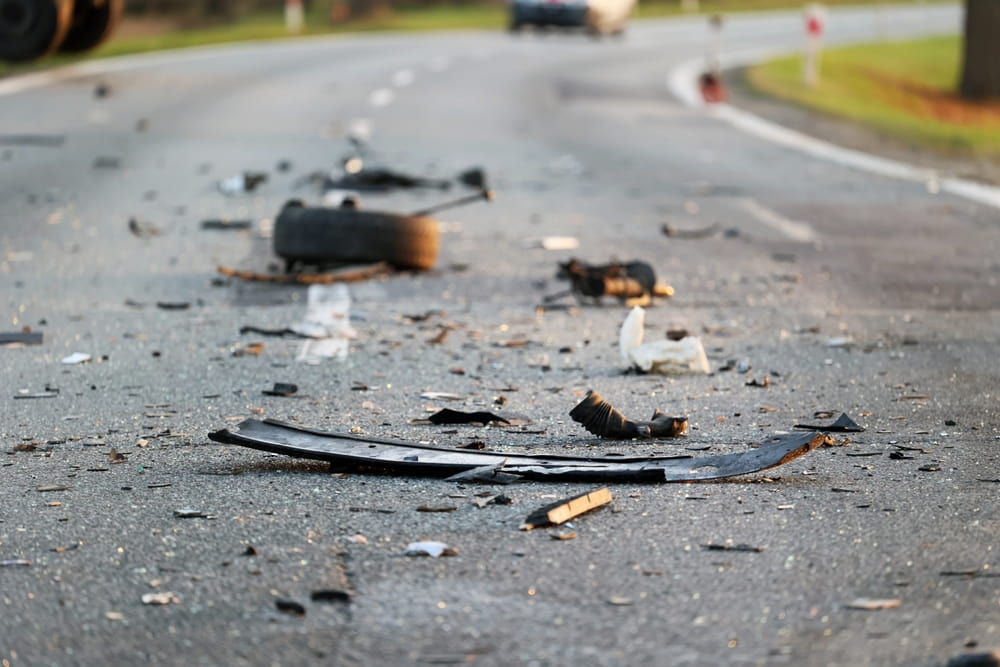
Where the vehicles ended up, where the glass and plastic landed, and where any tire marks begin and end let a reconstructionist calculate approach angles and speeds. Debris tends to concentrate near the point of impact rather than the point of rest, which helps establish where each collision actually occurred across several lanes.
Oklahoma Highway Patrol and Oklahoma City police document some of this, though not always in the detail a disputed case later requires. Scene photographs taken by anyone present often fill the gap.
Why the Crash Report May Not Settle It
A crash report is an officer’s opinion formed under time pressure at a scene that has already been cleared, and it is not binding on anyone. Officers arriving at a pileup interview drivers who are shaken, sometimes injured, and frequently wrong about what they experienced. The narrative gets written from those accounts.
This cuts both ways. A report that assigns fault to you is not the end of a claim, and a report that clears you does not close the question either. Reconstruction evidence developed later regularly changes the picture. If you request your report, the Oklahoma Highway Safety Office publishes crash data and record request information for state reports.
How Does Oklahoma Divide Fault Among Several Drivers?
Oklahoma uses a shared fault system where each person involved is assigned a percentage, and your recovery is reduced by your own share.
One wrinkle is specific to multi-vehicle crashes. The statute, 23 O.S. § 13, bars recovery only when an injured person’s negligence is greater than the combined negligence of everyone who caused the harm.
With a single defendant, being 45% at fault leaves you a claim and being 55% at fault ends it. With three at-fault drivers who together carry 60%, your 40% share is still less than their combined share, so the claim survives. More defendants can mean more room, not less.
Each of those drivers then pays only their own percentage. Oklahoma abandoned joint liability for most cases in 2011 under 23 O.S. § 15, so a driver found 15% responsible owes 15%, even if another defendant has no insurance and no assets.
Can a driver who was never sued still be assigned fault?
Yes. Oklahoma allows a jury to consider the fault of people who are not parties to the case, which the Oklahoma Supreme Court addressed in Bode v. Clark Equipment Co., 1986 OK 21. The statute compares your negligence against everyone who caused the damage, not only against the named defendants.
The practical effect in a pileup is that a defendant may argue a driver you did not sue carries most of the blame. That is an argument worth anticipating early, because the decision about whom to bring into a case is easier to make at the beginning than after a lawsuit is already filed.
What Happens If One of the Drivers Has No Insurance?
Your own uninsured and underinsured motorist coverage becomes the relevant policy. Oklahoma requires insurers to offer it under 36 O.S. § 3636, and it may be rejected only in writing. A rejection signed once stays valid for the life of the policy, which means many drivers carry no uninsured motorist coverage without remembering they declined it.
Oklahoma’s minimum liability limits are $25,000 per person and $50,000 per accident for bodily injury. In a five-car crash with several injured people, a single $50,000 policy divided among them does not go far. The Oklahoma Insurance Department publishes plain-language information on how uninsured motorist coverage works.
Check your own declarations page early. In multi-vehicle claims, the coverage you bought is often the coverage that matters most.
Why Four Insurers Rarely Reach the Same Conclusion
Each carrier investigates independently, and each one is evaluating its own insured’s exposure rather than trying to build a single agreed account of the crash. Carrier A concludes its driver was pushed. Carrier B concludes the same. Carrier C blames a vehicle that left the scene.
The result is a standoff that can persist for months while medical bills come due. Recorded statements taken during that period are used to build the case against whoever gives them, which is why what you say in those early calls tends to matter more in a pileup than in a simple collision.
What Protects a Multi-Car Claim in the First Weeks
A few habits tend to help more than anything else.
Photograph every vehicle involved from every angle, not just the one that hit you, and do it before anyone drives away. Write down license plates, since drivers scatter and contact information gets lost. Get names of anyone who stopped, because independent witnesses are far more valuable in a multi-car crash than in a two-car one.
Then move quickly on the vehicles. A written request to preserve the other cars and their recorded data has to reach the right people before repairs begin. That request is one of the few steps in an injury claim with a hard expiration date attached to it.
Multi-Vehicle Crash Questions People Ask
I was in the middle of the chain. Am I automatically at fault for hitting the car ahead of me?
No. Being pushed into the vehicle ahead by a rear impact is a defense, and the damage pattern on your car often supports it. The question is whether you struck the car ahead before being hit or only as a result of being hit, and that is an evidence question rather than an assumption.
Two of the drivers gave the police the same story, and it is wrong. Does that sink my claim?
Not necessarily. Consistent accounts carry weight, but physical evidence carries more, and reconstruction regularly contradicts what multiple drivers sincerely believed. Cases have turned on data showing a driver never touched the brakes despite testifying otherwise.
Can I make a claim against more than one driver at the same time?
Yes, and in a pileup it is often necessary. Each at-fault driver has a separate policy, and because Oklahoma assigns each defendant only their own percentage, leaving one out can mean leaving their share unrecovered.
One of the cars drove off before police arrived. What now?
That vehicle can still be relevant. A jury may consider the fault of an absent driver, and your uninsured motorist coverage may respond to a hit-and-run under the terms of your policy. Report it promptly, since most policies contain notice provisions that are shorter than the two-year filing deadline.
Call For A Free Consultation.
Available 24 Hours A Day, 7 Days A Week.
Four Stories, One Set of Facts
Everyone involved in a pileup remembers being struck rather than striking. That is not dishonesty, it is how a sudden impact registers. It also means the version of events that eventually controls the claim will come from the vehicles, not from the drivers, and the vehicles are on a timer.
If you were hurt in a chain reaction crash in the Oklahoma City metro, AP Injury Lawyers can start on the preservation steps while the evidence still exists. Consultations are free. Call or text +1 (405) 336-3000, or reach us through our contact page.
