
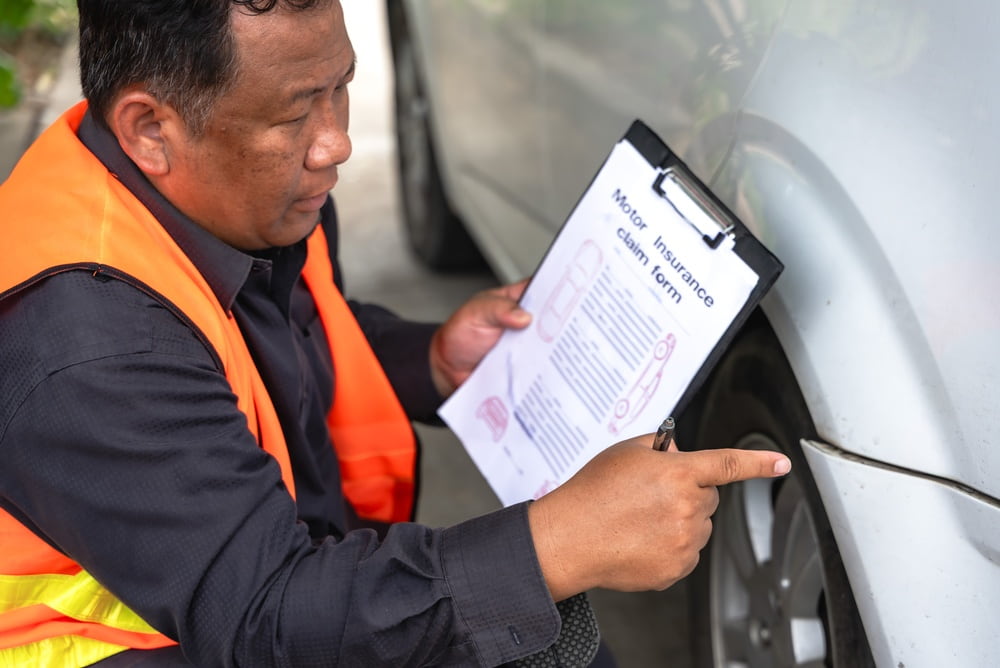
Knowing what to say to an insurance adjuster matters more than most people expect, because the first conversation frequently happens before anyone knows how badly they are hurt. It happens on day two, on a phone, while the person is exhausted and possibly on medication.
That conversation gets recorded, summarized, and quoted for the next year.
The adjuster is not a villain. They are a trained professional doing a job with objectives that do not match yours. Understanding what the questions are for is what changes the outcome.
Key Takeaways About Talking to an Adjuster
- You are not required to give a recorded statement to the other driver’s insurance company
- Anything you say about your injuries on day two will be measured against what you claim months later
- A blanket medical authorization opens your entire medical history, not just the records related to this crash
- Oklahoma law prohibits insurers from requesting a release broader than the subject matter of the claim (36 O.S. § 1250.5)
- Your own insurer owes you a duty of good faith and fair dealing, which the other driver’s insurer does not owe you
Key Statistics About Claims and Attorney Involvement
Why people call lawyers. Research published by the Insurance Research Council, an insurance industry funded organization, found that almost half of people with auto injury claims hired attorneys. The leading reasons included a recommendation from someone they knew, wanting the highest possible settlement, delays in settlement, and dissatisfaction with an offer. Nearly two thirds contacted an attorney within one week.
Consumer recoveries. The Oklahoma Insurance Department reported recovering nearly $11 million for consumers through complaint resolution in 2025 (Oklahoma Insurance Department).
Claim volume in Oklahoma. Oklahoma recorded 66,074 crashes in 2021, with Oklahoma City accounting for 18,935 of them (Oklahoma Highway Safety Office).
Legal relevance: the insurance industry’s own research identifies delay and low offers as the moment people stop handling claims alone. That is a useful data point coming from that source.
What Should You Say to an Insurance Adjuster After a Crash?
Give the basic facts, and nothing that requires you to guess.
- Confirm your name, the date and location, and the vehicles involved
- Say that you are being treated and that you are not able to describe your injuries fully yet
- Decline to give a recorded statement to the other driver’s insurer until you have advice
- Do not sign a blanket medical authorization
- Do not estimate speeds, distances, or your share of fault
- Do not say “I’m fine,” “I’m okay,” or “it was nothing”
You are allowed to end a call and call back later. A short conversation early does not have to become a long one.
What Is a Recorded Statement, and Do You Have to Give One?
A recorded statement is an interview, taken under recording, in which an adjuster asks about the crash and your injuries. It becomes part of the claim file and can be transcribed and quoted.
You generally are required to cooperate with your own insurer under your policy, which can include giving a statement. You are not required to give one to the other driver’s insurer. They have no contract with you.
The problem is timing, not honesty. On day two, a person does not yet know whether the stiffness in their neck is soreness or a disc injury. Saying “my back is a little sore” is truthful and becomes the baseline against which a later surgery looks exaggerated.
If you agree to a statement, a reasonable approach is to schedule it rather than do it on the spot, and to describe symptoms as ongoing and being evaluated rather than characterizing severity.
Questions Adjusters Ask, and What They Are For
“How are you doing today?”
It sounds like courtesy. In a recorded call it becomes a statement about your condition. “I’m okay” is a two word sentence that gets quoted for a year. A safer answer describes the situation rather than a mood: “I am still being treated.”
“Can you walk me through what happened?”
The narrative sets the fault framework. Describe what you observed. Do not estimate speeds, distances, or how many seconds anything took, and do not fill gaps with assumptions.
“Were you hurt?”
Adrenaline masks injury and some symptoms appear days later. Say that you are being evaluated and that the full picture is not known yet.
“Have you seen a doctor?”
Fine to answer directly. The question behind it is whether a treatment gap exists.
“Do you have any prior injuries or conditions?”
Do not guess and do not minimize. This question supports a later argument that the injury pre existed. Prior history is discoverable, so accuracy matters, and so does not speculating about your own medical history from memory.
“Can you sign this authorization so we can get your records?”
This is the request that does the most damage. Broad authorizations pull years of unrelated records. Limited, specific authorizations exist and are reasonable.
“We can settle this today.”
An early offer arrives before anyone knows what the claim is worth. Once a release is signed, later treatment for the same injury is generally your expense.
What Do People Say That Quietly Costs Them Money?
Apologizing
“I’m sorry” is reflexive courtesy in Oklahoma and gets recorded as an admission.
Speculating
“I think he was going about 50” is a guess that becomes testimony.
Social media
Photos, check ins, and comments are routinely reviewed. A picture at a family event says nothing about pain levels, and it will still be used.
Missing appointments
Gaps get treated as evidence the injury resolved. If cost or transportation is the obstacle, say so to the provider so the reason is in the record.
Cashing a check without reading it
Oklahoma’s unfair claims statute specifically addresses the practice of issuing a partial settlement check that contains a full release of total liability (36 O.S. § 1250.5). Read the back and the memo line.

Key Laws Oklahoma Claimants Can Point To
Oklahoma’s Unfair Claims Settlement Practices Act, at 36 O.S. § 1250.1 and following, lists conduct that constitutes an unfair claim settlement practice. Several are directly relevant to how these conversations go.
Requesting a release broader than the subject matter of the claim is listed as a prohibited practice.
Issuing a partial payment check containing a full release of total liability is listed.
Compelling a lawsuit by offering substantially less than the amount ultimately recovered is listed.
Failing to fully disclose benefits and coverages to a first party claimant is listed.
Insurers also carry response deadlines. Under 36 O.S. § 1250.4, an insurer must respond within 30 days to a written communication from a claimant that reasonably suggests a response is expected. Oklahoma Insurance Department rules require acknowledgment of a claim within 30 business days and a decision on a first party claim within 45 business days of a properly executed proof of loss.
Separately, your own insurer owes you a duty of good faith and fair dealing under Christian v. American Home Assurance Co., 1977 OK 141, and unreasonably withholding payment can support a bad faith claim. The other driver’s insurer owes you no such duty, which is the single clearest reason to treat the two conversations differently.
What Compensation May Include, and Why Early Talk Undercuts It
- Medical treatment already received and reasonably expected going forward
- Lost income and reduced earning capacity
- Pain, permanent limitation, and interference with normal life
- Property damage and out of pocket costs
The first three of those are exactly what an early conversation compresses. A claim discussed at week one is valued from week one information. Oklahoma has no cap on non economic damages following Beason v. I.E. Miller Services, Inc., 2019 OK 28, which means the gap between an early valuation and a complete one can be substantial.
When Should You Stop Talking and Call a Lawyer?
- A recorded statement has been requested
- A blanket medical authorization has been sent to you
- An offer arrived before you finished treatment
- Fault is being disputed or a percentage has been assigned to you
- The adjuster has stopped responding
- The injuries required surgery, hospitalization, or ongoing care
You can call for advice without hiring anyone. Most consultations are free, including ours.
Practical Habits for the Conversation Itself
Many people find it helpful to write down three facts before answering the phone: the date, the location, and the claim number. Sticking to those keeps a short call short.
Asking for the adjuster’s name, direct line, and claim number at the start of every call, and writing them down, creates a record that becomes useful if the file goes quiet.
Moving communication to email where possible produces a written trail, and a written communication triggers the 30 day response obligation under 36 O.S. § 1250.4.
Saying “I would like to think about that and call you back” is a complete answer. So is “I am not comfortable answering that yet.”
Reading anything before signing it, including the back of a check, takes two minutes and is irreversible in the other direction.
If an insurer will not respond at all, a complaint can be filed with the Oklahoma Insurance Department.
Adjuster Questions Answered by Attorneys
Can the insurance company deny my claim because I refused a recorded statement?
Not for that reason alone, when it is the other driver’s insurer. You have no contractual duty to them. Your own policy may require cooperation, which is a different situation, and even then the timing and scope of a statement can usually be discussed.
The adjuster was friendly and seemed to be on my side. Does that mean anything?
Friendliness is a professional skill, not a position on your claim. Adjusters handle a large volume of files and are evaluated on outcomes. A pleasant conversation and a low valuation are entirely compatible.
What if I already gave a statement and said something wrong?
It is not fatal. Statements get clarified, corrected, and put in context all the time, particularly where symptoms developed later. Tell a lawyer exactly what you said rather than hoping it does not come up.
Should I talk to my own insurance company differently?
Yes, in one important way. You owe your own insurer cooperation, and it owes you good faith. That relationship is governed by your policy and by Oklahoma law. Report the claim promptly and be accurate. If your own carrier begins disputing your damages, particularly on an uninsured motorist claim, that is a signal to get advice.
Does hiring a lawyer mean I stop talking to the adjuster entirely?
Generally yes. Once you are represented, communication typically routes through your attorney’s office, which removes the pressure of answering questions in real time.
Call For A Free Consultation.
Available 24 Hours A Day, 7 Days A Week.
The Call Is Not Small Talk
It is the first piece of evidence in your claim, and it is the only piece you create yourself, out loud, before you know what happened to your body.
If an adjuster has already called and you are not sure what you should have said, that is a normal reason to pick up the phone. AP Injury Lawyers will tell you where you stand. Call or text +1 (405) 336-3000, or use our contact page. Free consultation, 24 hour intake, no fee unless we recover. Se habla español.
