
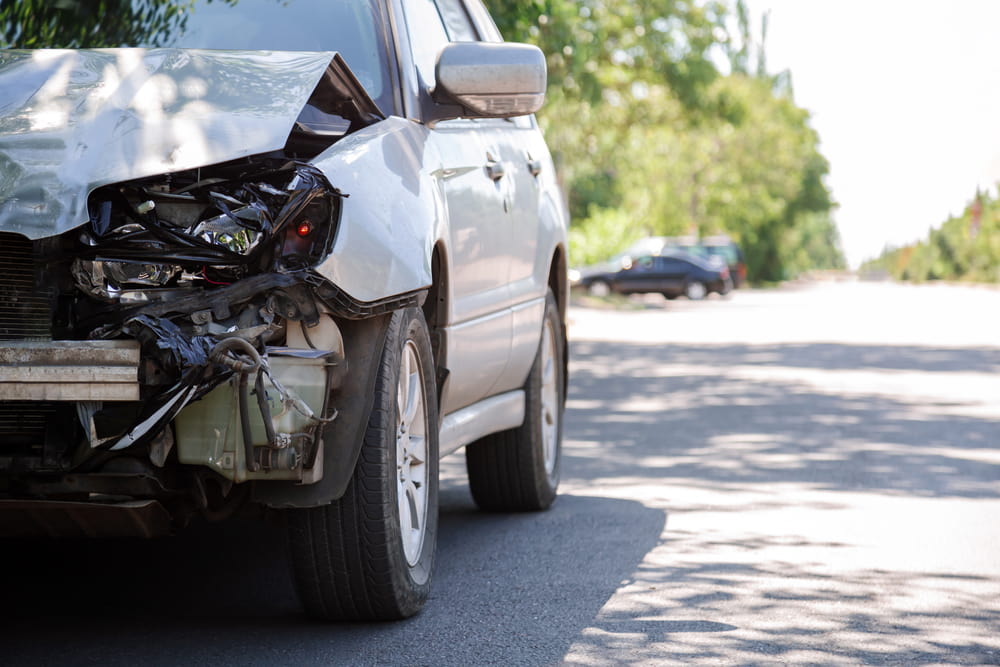
The car accident claims process in Oklahoma is not complicated to describe, but it is easy to lose control of. Most people meet it for the first time while injured, out of work, and getting calls from an adjuster who does this fifty times a week.
The part nobody explains is that the process has rules running in both directions. Oklahoma regulations set specific windows for an insurer to acknowledge a claim, to accept or deny it, and to keep a claimant updated.
Knowing where you are in the sequence, and what the other side owes you at each point, is most of the difference between a claim you are managing and one that is managing you.
Key Takeaways About the Oklahoma Claims Process
- Oklahoma is an at fault state, so the driver who caused the crash and their insurer are responsible for the loss
- Oklahoma rules require an insurer to acknowledge a claim within 30 business days and to advise a first party claimant of acceptance or denial within 45 business days of a properly completed proof of loss
- Settling before treatment is finished is usually permanent, because a release ends the claim
- Most Oklahoma injury lawsuits must be filed within two years of the crash (12 O.S. § 95(A)(3))
- Claims involving a city, county, or state entity run on a much shorter clock and require written notice within one year (51 O.S. § 156)
Key Statistics About Oklahoma Crashes and Coverage
Volume. Oklahoma recorded 66,074 crashes in 2021, including 8,679 injury crashes. Oklahoma City accounted for 18,935 of the state total (Oklahoma Highway Safety Office).
Uninsured drivers. The Oklahoma District Attorneys Council, which administers the state’s uninsured vehicle enforcement program, cites estimates that as much as 26% of vehicles on Oklahoma roads are uninsured (Oklahoma DAC).
Consumer complaints. The Oklahoma Insurance Department reported recovering nearly $11 million for consumers through complaint resolution in 2025 (Oklahoma Insurance Department).
Legal relevance: with roughly one in four vehicles potentially uninsured, a meaningful share of Oklahoma claims end up running through the injured person’s own uninsured motorist coverage rather than the other driver’s policy.
What Are the Steps in an Oklahoma Car Accident Claim?
A claim moves through the same six stages almost every time, and most of the delay happens in the first two.
- Report the crash and open claims with the involved insurers
- Complete medical treatment, or reach the point where a doctor says the condition has stabilized
- Gather records, bills, wage documentation, and any lien information
- Send a demand to the insurer with the full picture of loss
- Negotiate, or file suit if the deadline is approaching or the offer is unreasonable
- Resolve by settlement, or continue through discovery, mediation, and trial
Oklahoma’s rules give insurers specific response deadlines at several of these stages, and knowing them changes how a claim feels to handle.
What Is a Demand Package, and Why Does Everything Wait For It?
A demand package is the document that converts a set of medical records into a claim an insurer can actually evaluate. It sets out liability, the treatment history, the bills, wage loss, and the effect on daily life, and it asks for a specific amount.
It is generally sent after treatment is complete or a doctor has determined the condition has stabilized, because until then nobody knows what is being valued.
That is the single biggest reason a claim seems to sit quietly for months. Nothing meaningful is being negotiated during treatment. What is happening, if the case is being handled well, is that the record supporting the demand is being built.
What Deadlines Does the Insurance Company Have to Meet?
Oklahoma sets several. They come from the Unfair Claims Settlement Practices Act at 36 O.S. § 1250.1 and the Insurance Department’s rules at OAC 365:15.
Acknowledge the claim. Within 30 business days of receiving notice.
Provide forms and reasonable assistance. Promptly, with compliance measured within 30 days.
Accept or deny. A property and casualty insurer must advise a first party claimant of acceptance or denial within 45 business days after receiving a properly executed proof of loss.
Update if more time is needed. The insurer must say so within that window, give reasons, and send an updated letter every 45 days after that.
Warn about the deadline. An insurer must notify a first party claimant 30 days before the statute of limitations expires, and a third party claimant 60 days before.
Respond to your communications. Under 36 O.S. § 1250.4, an insurer must respond within 30 days to a written communication from a claimant that reasonably suggests a response is expected.
Two honest caveats. There is no Oklahoma deadline requiring payment by a specific date after a settlement is agreed to. And once a lawsuit is filed, these particular time limits stop applying.
Common Problems People Face During a Claim
The early offer
Offers made in the first weeks arrive before anyone knows what the injury actually is. They are usually built from the bills already submitted, which is a fraction of the eventual picture.
The recorded statement
An adjuster asks for a recorded statement and frames it as routine. Nothing requires giving one to the other driver’s insurer, and answers given while medicated, exhausted, or before symptoms fully appear get quoted back later.
The blanket medical authorization
A broad authorization opens years of unrelated medical history for review. Reasonable, limited authorizations exist. Blanket ones are requested because they are useful to the insurer.
Liens and reimbursement claims
Health insurers, Medicare, Medicaid, and Oklahoma hospitals may all assert rights against a settlement. Unidentified liens have wrecked otherwise good outcomes, because the net figure was never calculated.
Gaps in treatment
Missed appointments get read as evidence the injury resolved. The reason for a gap, whether it was cost, work, or transportation, rarely gets into the file unless someone puts it there.
Key Laws and Deadlines in Oklahoma
Two years to file suit. 12 O.S. § 95(A)(3) for most injury claims. Two years from the date of death for wrongful death under 12 O.S. § 1053.
Government entities. Written notice within one year of the loss, a claim deemed denied at 90 days if nothing happens, and suit within 180 days of denial (51 O.S. §§ 156, 157).
Comparative fault. Recovery is reduced by your percentage of fault and barred only if your share is greater than the defendant’s (23 O.S. § 13).
Several liability. Each at fault party is responsible only for its own share (23 O.S. § 15).
Minimum coverage. Oklahoma requires $25,000 per person and $50,000 per crash in liability coverage, plus $25,000 in property damage (47 O.S. § 7-324).
Uninsured motorist coverage. Must be offered on every Oklahoma auto policy and can only be rejected in writing (36 O.S. § 3636).
Bad faith. An Oklahoma insurer owes its policyholder a duty of good faith and fair dealing, and unreasonably withholding payment can support a separate tort claim under Christian v. American Home Assurance Co., 1977 OK 141.
What Compensation May Include in an Oklahoma Claim
- Medical expenses already incurred and reasonably expected in the future
- Lost wages, and reduced earning capacity where the injury limits future work
- Pain, permanent limitation, scarring, and disruption to normal activity
- Property damage, including diminished value in some cases
- Out of pocket costs such as mileage to appointments, medical equipment, and household help
Oklahoma no longer caps non economic damages in personal injury cases. The $350,000 limit that appears in older articles was struck down in Beason v. I.E. Miller Services, Inc., 2019 OK 28.
When Should You Talk to a Lawyer About a Car Accident Claim?
Common triggers: injuries requiring more than a single visit, disputed fault, a driver who was uninsured or carried minimum limits, a recorded statement request, a denial, an offer that arrived before treatment ended, or a crash involving a commercial vehicle or government vehicle.
Also worth a call if the insurer has simply stopped responding. Oklahoma’s rules give you something concrete to point at in that situation.
Habits That Make a Claim Easier to Prove
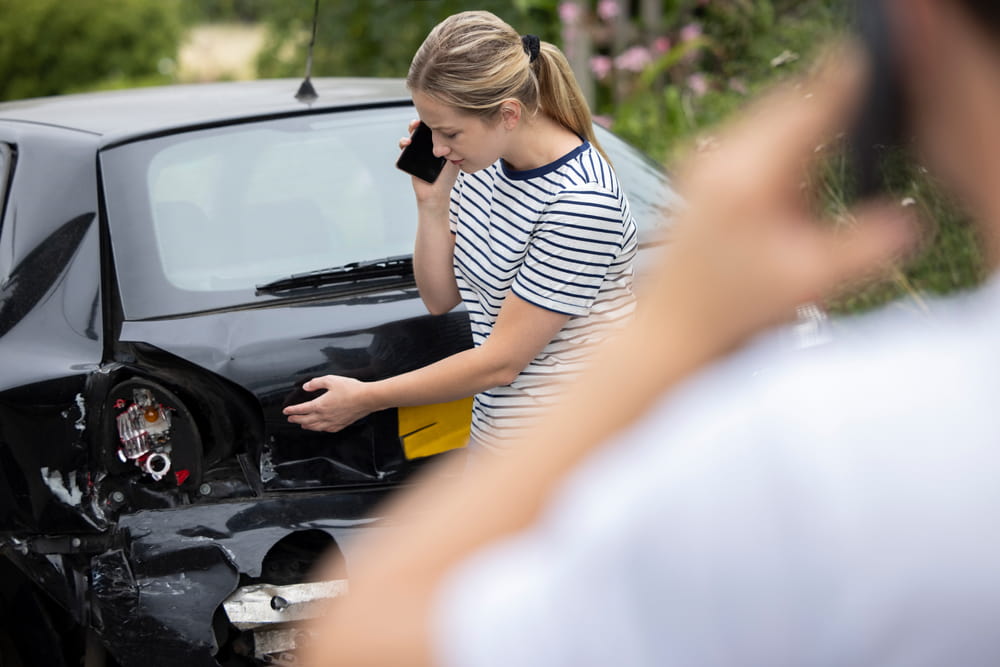
Many claimants find it helpful to keep every document in one place: the crash report, claim numbers, adjuster names, bills, explanations of benefits, and receipts.
Putting requests in writing, including email, tends to produce faster movement than phone calls, in part because a written communication triggers the 30 day response obligation under 36 O.S. § 1250.4.
Some people keep a short weekly note about pain levels, missed work, and activities they could not do. It takes two minutes and becomes the most specific record of the non economic loss anyone will have.
Attending every appointment, and telling providers when transportation or cost is the obstacle, keeps the treatment record clean.
If the insurer will not respond, a complaint can be filed with the Oklahoma Insurance Department, which handles consumer complaints against insurers licensed in the state.
Car Accident Claim Questions Answered by Attorneys
Do I have to use my own insurance if the other driver was at fault?
Not necessarily, but there are situations where it helps. Using collision coverage can get your vehicle repaired far faster, and your insurer can pursue reimbursement from the at fault carrier afterward. Medical payments coverage, if you purchased it, pays regardless of fault.
What happens if the at fault driver's insurer denies the claim?
A denial is a position, not a conclusion. Oklahoma requires denials to be in writing and to reference the specific policy provisions relied on. A denial can be challenged with additional evidence, escalated within the carrier, reported to the Insurance Department, or answered by filing suit before the deadline.
Can I open a claim if I do not have a police report yet?
Yes. A claim can be reported immediately, and the report can be added when it becomes available. Waiting for the report to arrive before notifying an insurer is a common source of unnecessary delay.
Does it hurt my claim if I was partly at fault?
Not automatically. Oklahoma reduces recovery by your share of fault and bars it only when your share is greater than the other party’s. A claim where you carry some responsibility is still worth pursuing, and the percentage itself is often negotiable.
Call For A Free Consultation.
Available 24 Hours A Day, 7 Days A Week.
The Claim Runs on Rules, Not on Goodwill
An adjuster is not being unhelpful when the file goes quiet. The file goes quiet because the process rewards it, and because most claimants do not know there are response obligations on the other side.
If you were hurt in a crash in the Oklahoma City area and the claim has stopped moving, call AP Injury Lawyers at +1 (405) 336-3000 or reach us through our contact page. Free consultation, 24 hour intake, and no fee unless we recover. Se habla español.
