
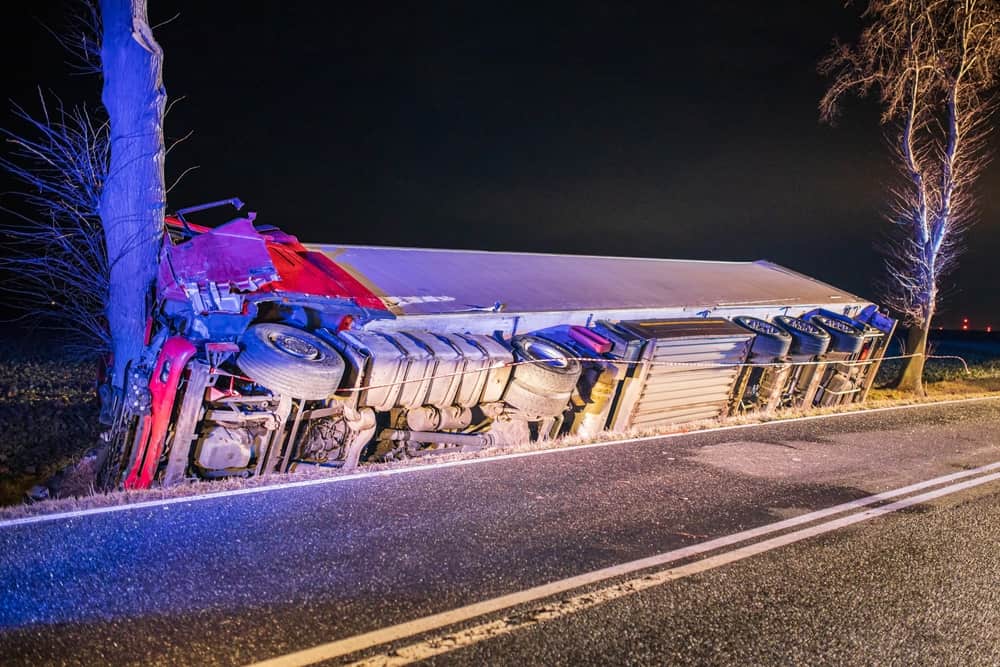
Trucking company liability is the part of a serious truck crash claim that decides whether there is meaningful recovery at all. The driver is the person at the scene. The company is the entity with the insurance, the records, and usually the decisions that put an unsafe truck on I-40 in the first place.
Federal safety regulations create duties that belong to the carrier, not the driver. Hiring standards, drug and alcohol testing, hours of service oversight, and vehicle maintenance are all company obligations, and each one is a place a case can be built.
Oklahoma also has one rule on this subject that runs against the national grain, and it works in the injured person’s favor.
Key Takeaways About Trucking Company Liability
- Naming only the driver in a truck case leaves the strongest claims and the largest policies untouched
- Federal regulations create documented company duties, which means violations are provable rather than argued
- Oklahoma allows a negligent entrustment claim to proceed against a carrier even when the carrier admits the driver was acting in the scope of employment
- Federal retention periods are short: driver vehicle inspection reports for 3 months, driver logs and supporting documents for 6 months
- Preservation demands sent early are what keep a case from being decided by missing evidence
Key Statistics About Large Truck Crashes
Oklahoma. NHTSA recorded 129 people killed in large truck crashes in Oklahoma in 2023. Of those, 84 were occupants of other vehicles (NHTSA, Large Trucks: 2023 Data).
National pattern. In the same year, 5,472 people were killed in crashes involving large trucks nationally, and 70% of them were occupants of vehicles other than the truck.
Mechanical condition. The FMCSA Large Truck Crash Causation Study, which examined 967 crashes between 2001 and 2003, coded brake problems as an associated factor for the truck in 29.4% of cases (FMCSA).
Legal relevance: brake condition is a maintenance obligation the carrier owns under 49 CFR §§ 396.3 and 396.11. When brakes are a factor, the claim is against the company by definition.
Can the Trucking Company Be Held Responsible, Not Just the Driver?
Yes, and in serious crashes the company is usually the more important defendant. A carrier is generally responsible for its driver’s negligence on the job under respondeat superior, which means the employer answers for the employee. Separate claims can target the company’s own conduct: negligent hiring, retention, supervision, entrustment, and maintenance. In Oklahoma, a carrier cannot defeat a negligent entrustment claim just by admitting the driver was working, under Fox v. Mize, 2018 OK 75
The right defendants in any given case depend on the facts, which is why the investigation matters more here than in an ordinary crash.
What Is Respondeat Superior, and Where Does It Stop?
Respondeat superior is the rule that an employer answers for an employee’s negligence committed within the scope of employment. In a truck case it means that if the driver was working when the crash happened, the carrier is responsible for the driver’s mistakes.
It is the simplest route to the company, and it is limited in two ways.
First, it only reaches conduct within the scope of employment, which carriers sometimes dispute.
Second, it says nothing about what the company itself did wrong. A carrier that hired a driver with three prior violations, or that ignored log violations for months, is not just answering for someone else’s mistake. It made its own.
That is where the direct claims come in.
Which Claims Target the Company's Own Conduct?
Negligent hiring
The carrier put an unfit person behind the wheel. Federal rules require an employment application, an investigation into the driver’s history, and a review of the motor vehicle record (49 CFR §§ 391.21, 391.23, 391.53). The driver qualification file either shows those steps or shows they were skipped.
Negligent retention
The carrier kept a driver after learning, or after it should have learned, that the driver was unsafe. Annual reviews of driving records are required under 49 CFR § 391.25, which creates a paper trail of what the company knew and when.
Negligent supervision
The carrier failed to monitor and correct the driver. Ignored hours of service violations and unaddressed log discrepancies are the usual examples.
Negligent entrustment
The carrier gave the truck to a driver it knew or should have known was incompetent or reckless. In Oklahoma this claim carries unusual weight, explained below.
Negligent maintenance
The carrier failed to systematically inspect, repair, and maintain the vehicle, which is a direct requirement under 49 CFR § 396.3. Driver vehicle inspection reports under § 396.11 record what the driver reported and whether it was fixed.
Why Oklahoma Is Different: Fox v. Mize
In many states, once a trucking company admits its driver was working at the time of the crash, courts dismiss the direct negligence claims as redundant. The theory is that the company will be liable either way, so claims about hiring and entrustment add nothing.
Oklahoma took a different path.
In Jordan v. Cates, 1997 OK 9, the Oklahoma Supreme Court had treated a negligent hiring claim as unnecessary where the employer stipulated to respondeat superior liability.
Then in Fox v. Mize, 2018 OK 75, the Court held that “an employer’s liability for negligently entrusting a vehicle to an unfit employee is a separate and distinct theory of liability from that of an employer’s liability under the respondeat superior doctrine.” It expressly limited Jordan to its facts.
Practical effect for Oklahoma cases: a carrier cannot make the negligent entrustment claim disappear simply by admitting the driver was on the clock. The company’s own decision to hand over the truck stays in the case, and so does the evidence supporting it.
What About Owner Operators and Leased Trucks?
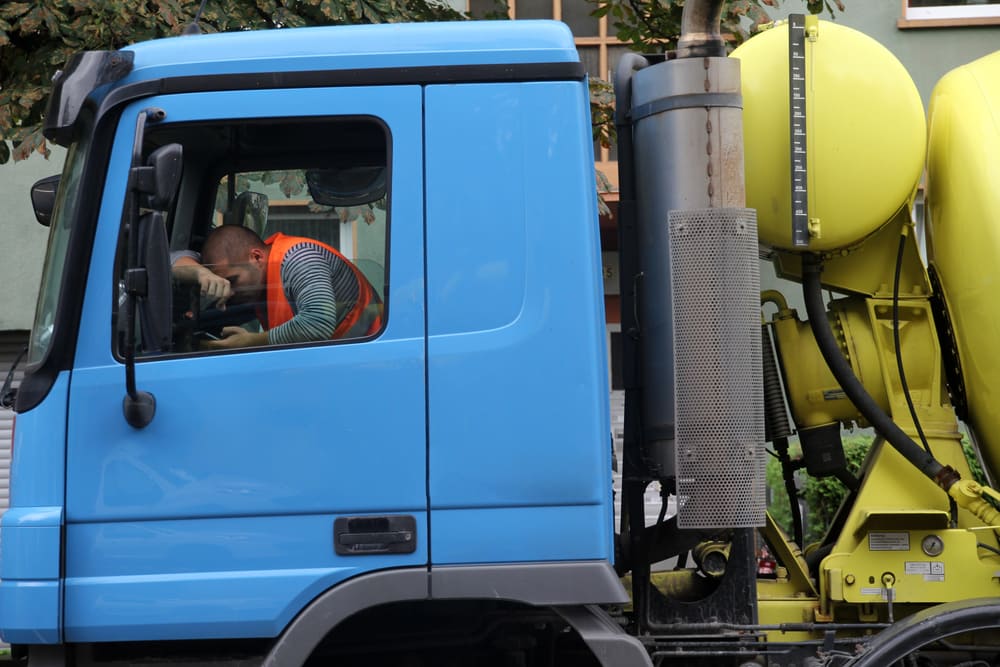
Carriers frequently respond that the driver owned the truck and was an independent contractor. Federal regulation anticipated that argument.
Under 49 CFR § 376.12(c)(1), a lease must provide that the authorized carrier has exclusive possession, control, and use of the equipment for the duration of the lease, and that the carrier assumes complete responsibility for its operation.
In plain terms: when a truck runs under a carrier’s federal operating authority and carries its markings, the regulation requires that carrier to take responsibility for how the truck is operated. Ownership of the tractor is not the end of the analysis.
Common Problems People Face in Truck Cases
Evidence that expires on schedule
Federal retention periods are short. Driver vehicle inspection reports must be kept 3 months (49 CFR § 396.11). Driver logs and supporting documents, 6 months (§ 395.8(k)). Maintenance records, 1 year plus 6 months after the vehicle leaves the carrier’s control (§ 396.3(c)). Negative drug test results, 1 year (§ 382.401).
Waiting a year to make a written demand can mean the most important documents were lawfully destroyed.
A rapid response team on the other side
Serious truck crashes often bring a carrier’s investigators and defense counsel to the scene the same day. Nobody is doing that for the injured person.
The truck gets repaired or sold
Electronic control module data and physical evidence disappear when a tractor goes back into service or to salvage.
Multiple entities
A single load can involve a motor carrier, an owner operator, a broker, a shipper, a maintenance contractor, and a trailer owner. Oklahoma’s several liability rule (23 O.S. § 15) means each pays only its own share, so leaving one out costs recovery.
Key Laws and Deadlines That Apply to Truck Cases
Law/Deadline | Details/Reference |
|---|---|
File Suit (Injury Claims) | 2 years (12 O.S. § 95(A)(3)) |
File Suit (Wrongful Death) | 2 years (12 O.S. § 1053) |
Comparative Fault | Recovery reduced by percentage of fault; barred if your share exceeds defendant’s (23 O.S. § 13) |
Several Liability | Each defendant pays only its own allocated share (23 O.S. § 15) |
Federal Insurance Floor | $750,000 for general freight; $1M–$5M for hazardous materials (49 CFR § 387.9) |
Hours of Service | 11-hour driving limit in a 14-hour window; 10 consecutive hours off-duty; 60/70-hour weekly limits (49 CFR § 395.3) |
What Compensation May Include in a Serious Truck Case
- Emergency and hospital care, surgery, and long term rehabilitation
- Future medical treatment and assistive equipment
- Lost income and reduced earning capacity
- Pain, permanent limitation, disfigurement, and loss of normal activity
- Home or vehicle modifications in catastrophic cases
- In a fatal case, the losses available under 12 O.S. § 1053
Truck crashes produce a higher share of catastrophic outcomes, which is exactly why carriers defend them hard from the first day.
When Should You Talk to a Lawyer About a Truck Crash?
Effectively always, and quickly. The specific triggers: any hospitalization, any commercial vehicle involved, any dispute about who was at fault, a carrier’s investigator contacting you, a request for a recorded statement, or an early offer.
The single most time sensitive step in a truck case is sending a written preservation demand to the carrier and its insurer. That step is measured in days and weeks, not months.
Documents Worth Preserving From Your Side
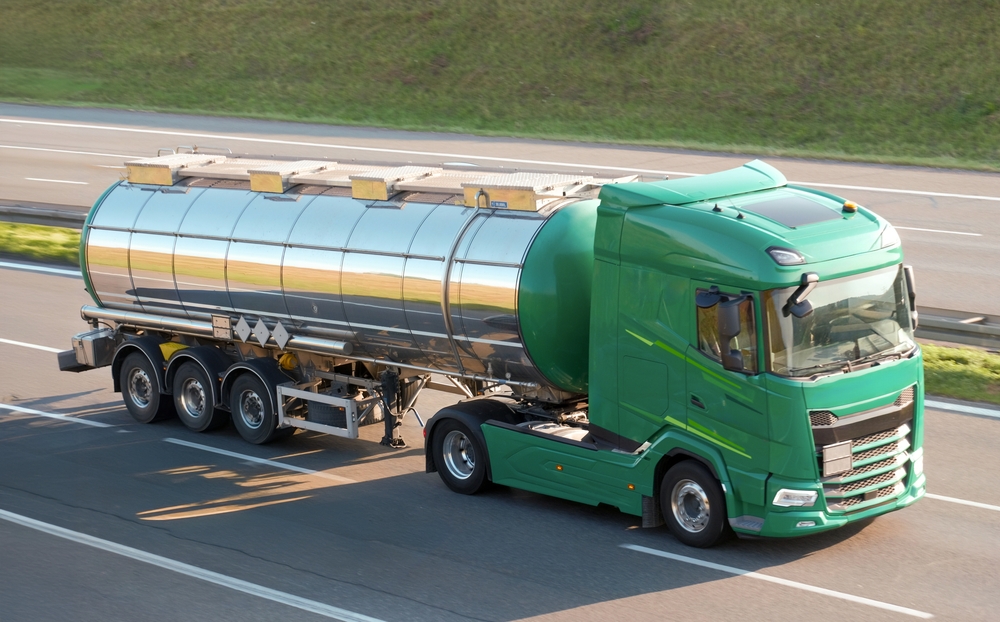
Many people find it helpful to photograph the tractor and trailer from several angles, including the doors, so the carrier name, USDOT number, and unit numbers are legible. That identifies every entity involved.
Keeping the crash report number, the responding agency, and the names of any witnesses in one place saves weeks later.
Noting the exact location, including the highway, direction, and nearest mile marker or exit, allows a follow up canvass for cameras.
Saving your own vehicle, or at least documenting it thoroughly, preserves physical evidence of impact forces that gets lost when a car is totaled and sent to salvage.
Trucking Liability Questions Answered by Attorneys
The truck driver was cited. Does that settle the case?
No. A citation is a traffic matter with a different standard of proof, and it says nothing about what the company did. Cases are frequently strongest against the carrier even where the driver’s own conduct looks like a simple error.
What is a spoliation letter and why does everyone mention it?
It is a written demand that a carrier and its insurer preserve specific evidence, including logs, electronic data, inspection reports, the driver qualification file, and the vehicle itself. It stops routine destruction and creates a record that the company was on notice, which matters if evidence later goes missing.
Can I still bring a claim if the crash happened on a highway outside Oklahoma City?
Yes. Where suit is filed depends on where the crash occurred and where the defendants are located, and Oklahoma City’s boundaries extend into four counties. That is a venue question your lawyer sorts out, not a barrier to the claim.
Does it matter that the trucking company is based in another state?
Not to your ability to bring a claim. Interstate carriers operating in Oklahoma are subject to federal regulation and can generally be sued where the crash happened. Out of state ownership is common and routine.
Call For A Free Consultation.
Available 24 Hours A Day, 7 Days A Week.
The Records Are Already Counting Down
Somewhere right now, a carrier’s retention schedule is running on the documents that would prove this case. Three months for inspection reports. Six months for logs. Nobody has to destroy anything improperly for the file to go empty.
If a commercial truck injured you or someone in your family, do not wait for the insurance company to explain the timeline. Call AP Injury Lawyers at +1 (405) 336-3000 or reach us through our contact page. Free consultation, 24 hour intake, no fee unless we recover. Se habla español.
