
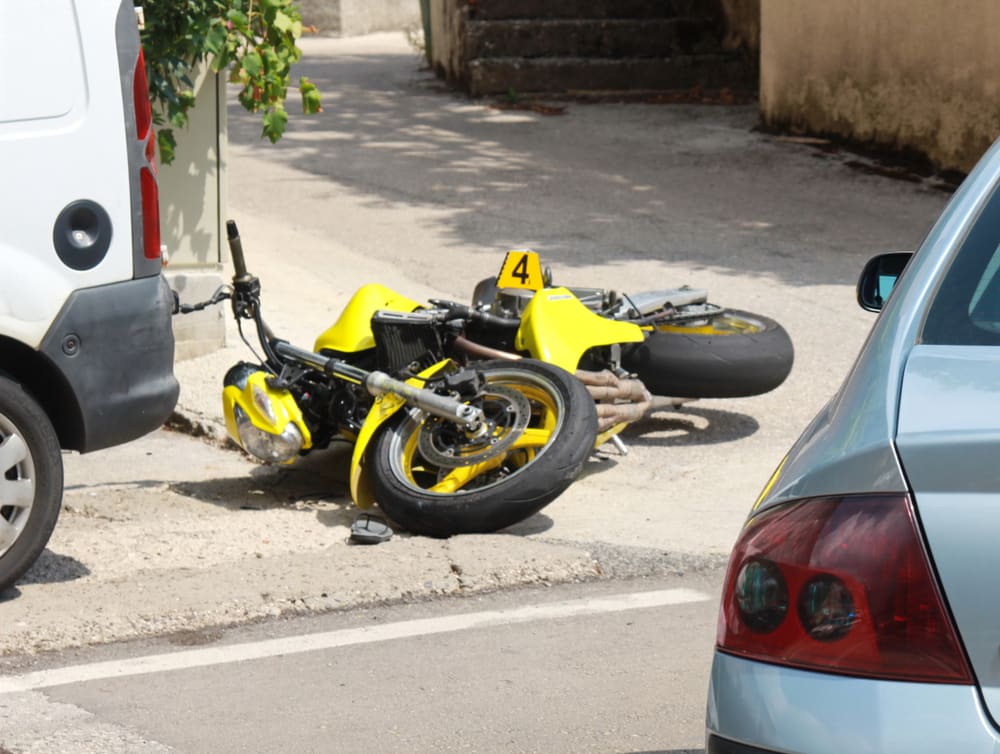
Oklahoma’s motorcycle helmet law is short, and the legal consequence of not wearing one is shorter still. Adults are free to ride without a helmet here, and that choice is not supposed to follow a rider into a courtroom after someone else causes a crash.
Yet nearly every rider who files a claim in the Oklahoma City metro hears about their helmet within the first few calls, usually framed as a question about how careful they were being. The law and the negotiation are two different conversations.
Can Going Without a Helmet Be Used Against You in an Oklahoma Injury Claim?
Generally not in front of a jury. Oklahoma requires helmets only for riders and passengers under 18, and an Oklahoma Court of Civil Appeals decision held that evidence of helmet nonuse is generally inadmissible on liability, contributory negligence, or damages. That will not stop an adjuster from raising it in settlement talks, where the rules of evidence do not apply.
Who Is Required to Wear a Helmet in Oklahoma?
Riders and passengers under the age of 18. The statute, 47 O.S. § 12-609, provides that no person under 18 “shall operate or ride upon any motorcycle unless such person is properly wearing a crash helmet” meeting the federal standard at 49 C.F.R. § 571.218.
Riders 18 and older have no helmet requirement in Oklahoma. The National Highway Traffic Safety Administration’s summary of state motorcycle laws lists Oklahoma among the age-specific states for exactly this reason.
Is eye protection required?
Yes, unless the motorcycle has an adequate windshield. The same statute requires a windshield “of sufficient quality, size and thickness to protect the operator from foreign objects,” and allows goggles, protective eyewear meeting ANSI Standard Z87.1 with positive retention, or a face shield in its place.
The statute also lists other equipment: two mirrors with at least three inches of reflective surface each, a working speedometer, a fender over each wheel, a horn, and a muffler.
Does a younger rider with a restricted license face different rules?
Yes, and they are stricter. Oklahoma allows a restricted Class D license with a motorcycle-only restriction beginning at age 14 under 47 O.S. § 6-105, but the conditions attached to it include completing a state-approved basic rider course, staying on an engine of 300 cubic centimeters or less, riding only between 4:30 a.m. and 9:00 p.m., and riding “while wearing approved protective headgear.”
For those riders the helmet requirement is a license condition rather than an age rule, and it applies regardless.
What Happens When Someone Tries to Raise It in Court?
An Oklahoma appellate court has said the jury does not hear it. In Johnston v. Stacy, the Oklahoma Court of Civil Appeals addressed helmet nonuse directly and wrote that it found “no tradition in Oklahoma jurisprudence that evidence of helmet nonuse can be introduced for the purpose of establishing liability or contributory negligence,” holding “that such evidence is generally inadmissible.”
The court went further and applied the same reasoning to damages, stating that evidence of helmet nonuse “currently is not admissible in a damages argument” absent direction from the Legislature. Its reasoning rested on a simple point: the only statement the Legislature has made on this subject was to repeal the adult helmet requirement.
How any individual judge rules on an evidentiary question in a particular case is never fully predictable, and a rider should not treat this as an absolute. The direction of Oklahoma authority, though, runs against letting a defense attorney turn a legal choice into a finding of fault.
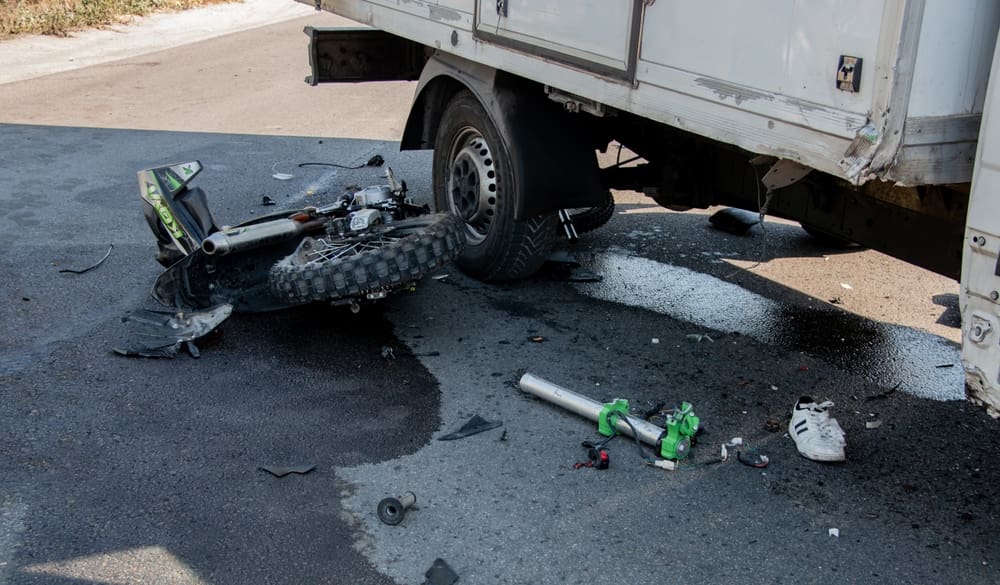
Why the Seat Belt Statute Is a Useful Comparison
Oklahoma has a statute doing explicitly for seat belts what the case law does for helmets. Under 47 O.S. § 12-420, “the use or nonuse of seat belts shall not be submitted into evidence in any civil suit in Oklahoma,” language the Oklahoma Supreme Court has described as clear and mandatory.
The policy behind both rules is the same. A person who causes a crash does not get a discount because the person they hurt made a lawful choice about protective equipment. The comparison also explains why the helmet question keeps resurfacing: riders have a court decision rather than a statute, and a statute is harder to argue with.
So Why Does the Adjuster Bring It Up?
Because settlement negotiations are not trials, and nothing bars an adjuster from mentioning it. Riders who call AP Injury Lawyers after a crash have usually heard it at least once already.
Most injury claims resolve without a lawsuit. In that setting there is no judge, no evidence rule, and no one to object. An adjuster who suggests your damages should be discounted because you were not wearing a helmet is not making a legal argument. They are testing whether you know the law.
This is why the response matters. A claim that is documented, supported by medical records, and handled by someone who can point to the authority tends to get a different response than a claim where the rider is negotiating alone.
The same dynamic shows up in a related argument about visibility, loud pipes, lane position, or riding gear generally. The theme is always that the rider assumed a risk. Oklahoma’s shared fault rule allows a real argument about a rider’s driving. It does not turn a lawful equipment choice into negligence.
What Helmet Use Genuinely Affects
The medicine, not the blame. This distinction gets lost, so it is worth stating plainly.
Helmets reduce the severity of head injuries, and the safety case for wearing one is not in dispute. A rider who goes without one faces a meaningfully higher chance of a traumatic brain injury in a crash. None of that is a legal argument against the rider. It is a reason to wear a helmet.
Where it does enter a claim legitimately is in causation and treatment. A head injury has to be documented, evaluated, and connected to the crash like any other injury.
Riders who decline transport at the scene and feel fine that evening frequently develop symptoms days later, and the gap in the record becomes an argument about whether the crash caused the problem. That argument is about medical evidence, and it applies to helmeted riders too.

What Oklahoma's Crash Numbers Show
Motorcycle crashes in Oklahoma produce serious injuries at a rate far out of proportion to the number of bikes on the road. The Oklahoma Highway Safety Office’s Crash Facts data for motorcyclists recorded 1,143 motorcycle-involved crashes in a single year, with 1,285 motorcyclists involved.
Of those riders, 76 were killed and 276 sustained serious injuries. Another 441 had minor injuries and 273 had possible injuries. Put differently, the majority of motorcyclists involved in a reported Oklahoma crash are hurt in some way, which is not true of occupants in passenger vehicles.
What Riders Often Do in the First Days
A few steps tend to make a difference later.
Many riders find it helpful to get evaluated even when they feel able to walk away, because head and internal injuries frequently announce themselves late. Photographing the bike, the gear, and the scene before anything is moved preserves evidence that disappears within hours.
Riders also tend to benefit from keeping the damaged helmet and gear rather than discarding it. A cracked helmet documents the force involved. Where no helmet was worn, the absence of gear is simply not the issue the other side will want it to be.
Reporting the crash to your own insurer promptly matters too, particularly where uninsured motorist coverage may come into play. Policy notice provisions run on their own clocks, separate from Oklahoma’s two-year deadline to file suit.
Helmet and Claim Questions Riders Ask
My passenger was 16 and not wearing a helmet. Does that create a problem for me?
It raises a different question than an adult rider’s own helmet use, because the requirement for a passenger under 18 is a legal one. How that affects a claim depends on the facts, including who was responsible for the passenger and what the injuries were. This is a situation worth discussing with a lawyer rather than working out from a general rule.
I was wearing a half helmet that is not DOT certified. Does that count?
The certification standard in the statute applies to riders under 18. For an adult rider the statute imposes no helmet requirement at all, so the type worn is not a legal question. It may still matter medically when a doctor evaluates how the head injury occurred.
The other driver's insurer already made an offer and mentioned my helmet. Should I respond to that?
You are not obligated to accept an offer or to explain your equipment choices. An early offer that arrives before treatment is finished is usually based on incomplete information about the injuries, and an offer mentioning your helmet is telling you something about how the file is being valued.
Does Oklahoma's shared fault rule still apply to a motorcycle claim?
Yes, and it applies to how you were riding. Speed, lane position, signaling, and right of way are all fair subjects. Your recovery is reduced by your share of fault, and is barred only if your share is greater than the combined fault of everyone else involved.
The driver who hit me had no insurance. Does my own policy help?
It may. Oklahoma insurers must offer uninsured and underinsured motorist coverage under 36 O.S. § 3636, and a driver can decline it only in writing. Many riders carry it without realizing, since the rejection has to be signed and many people never sign one.
That coverage applies to you as a rider, and it can also respond to a hit-and-run under the terms of your policy. Check your declarations page early, because most policies require notice of an uninsured motorist claim well before Oklahoma’s two-year filing deadline arrives.
Can a rider without a motorcycle endorsement still bring a claim?
Riding without the proper endorsement is a separate legal issue and does not by itself decide who caused a crash. It is the kind of fact a defense will use, and it is worth raising with a lawyer early rather than hoping it goes unnoticed.
Call For A Free Consultation.
Available 24 Hours A Day, 7 Days A Week.
The Question Nobody Should Have to Answer Twice
Oklahoma decided years ago that adults choose for themselves on this. A driver who turns left across your lane does not get to revisit that decision afterward, and neither does their insurance company.
If you were hurt riding in the Oklahoma City metro, AP Injury Lawyers can look at what happened and tell you where the claim actually stands. Consultations cost nothing. Call or text +1 (405) 336-3000, or use our contact page.
